
Playtime helps kids learn by doing. When a child builds, pretends, sorts, or takes turns, they practice skills like problem solving, sharing ideas, and following rules. You don't need expensive gear to make that happen, just a little time and a few simple things within reach.
Free play is where a lot of the learning happens. A child who decides a cardboard box is a race car or a bakery is working out how the world fits together. Adults can guide a bit, but letting kids lead often leads to the best ideas.
Playing together builds other skills too. Games with turns teach patience, and building something with a sibling or friend means talking through plans and compromising. Even a quick game of cards at the kitchen table gives kids practice reading others and waiting their turn.
Regular play also gives a child a break from screens and structured tasks. Try keeping a small basket of open-ended items nearby, like blocks, fabric scraps, or a few toy figures, so kids can start something on their own when they get bored.
If you want a quick starting point, the Ravensburger Fun at the Carnival 300 Piece Puzzle is a good one for slower, focused play that a child can finish over a few sittings. Puzzles like this work well for kids who like to take their time and see a picture come together.
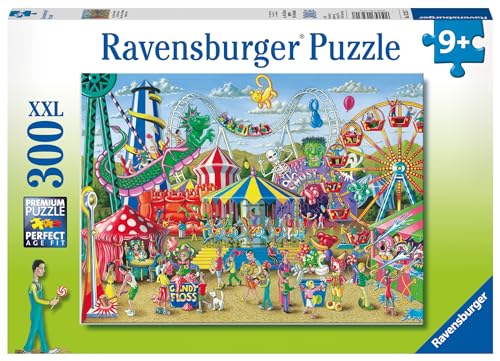
Ravensburger Fun at the Carnival 300 Piece Puzzle
A bright 300 piece jigsaw with a fairground scene packed with rides, a fortune teller and a haunted hall.
Product information
Our review: 4.2 out of 5
Product links
Picking Toys That Keep Kids Engaged
Not every toy keeps a kid busy for more than five minutes, and that's usually not the kid's fault. The best picks tend to have a few things in common. They can be used in more than one way, they let a child change the rules, and they don't come with one correct ending. Start by looking at what the box promises and then ask yourself what else a child could do with it.
Here's a quick checklist to use in the toy aisle or while you browse:
- Can it be played with alone and with another kid?
- Can the child add their own pieces, characters, or made-up rules?
- Does it have a clear start but no fixed finish?
- Will it still be interesting after the first few tries?
Pay attention to the age range printed on the packaging and treat it as a starting point. A child who is ahead of the label might fly through a simple toy in an afternoon, while a younger one might get frustrated with something above their level. If you are unsure, pick something a bit easy and let the child stretch into it. Also think about where the toy will live. Pieces that can be scattered across a floor and picked up in a hurry are handy for busy households.
For a kid who likes building and rebuilding, a snap-together construction set made for toddlers is a solid choice. The Stickle Bricks Fun Tub Creative Construction Toy for Toddlers lets little hands stick pieces together in whatever shape they dream up, and they can take it apart and start over whenever they like. That repeat-and-redo quality is what keeps them coming back.

Stickle Bricks Fun Tub Creative Construction Toy for Toddlers
A toddler building set with chunky interlocking bricks and a tub that keeps the pieces together after play.
Product information
Our review: 4.3 out of 5
Product links
If you're buying for a child who loves a card game or a quick challenge, the Classic Kids Card Games Pack of 4 Travel Fun is easy to toss in a bag. Pick one game the whole family can learn together, and you'll have a ready activity for car rides, waiting rooms, or a rainy afternoon. Card games also give kids a chance to practice turn-taking, which is a bonus you don't have to plan for.
Setting Up a Space for Pretend Play
A pretend play corner doesn't need a whole room. A corner of the living room, a spot under a table with a sheet over it, or a shelf in a bedroom can all work. Pick a spot where the child can spread things out, and where the mess won't block a walkway or a doorway.
Start by clearing the floor. A rug or a flat sheet helps mark the play zone and keeps small pieces from rolling under the sofa. Keep the space away from heaters, stoves, and open flames, and don't let kids climb on chairs or stools to reach shelves. If you hang a play kitchen or a shelf, use the wall fixings the maker gives and check that it stands firm before a child plays on it.
Next, think about the props. Here's a simple list to get started:
- A few small boxes or bowls that can stand in for food or dishes
- Scarves, old hats, or fabric scraps for costumes
- A cardboard box for a shop counter, a car, or a hideout
- Paper and pencils for menus, tickets, or shopping lists
- A basket or bin to hold everything so the play area stays tidy
Mix in a few items that match the kid's current favorite story or job idea. A child playing doctor will want a cup for medicine and a notepad for appointments. A child running a café will want pretend coins and a menu. Ask the child what they want the space to be, then let them help pick out what goes in it.
If you have a dollhouse furniture set, it fits neatly into this kind of corner. The 36 Pcs Dollhouse Furniture Set for Role-Play Fun gives kids a ready-made set of pieces to arrange their own rooms and stories. Keep the set in a labeled tub so it's easy to put back after playtime.

36 Pcs Dollhouse Furniture Set for Role-Play Fun
A big bundle of tiny furniture pieces for building a room from scratch, with plenty to arrange and rearrange.
Product information
Our review: 3.8 out of 5
Product links
Finally, set up a clean-up routine that the child can follow. Use the same bin each time, and let them put things back in the same spot. A quick song or a timer for five minutes makes it feel like part of the game rather than a chore.
Simple Ideas to Try This Weekend
Most of the fun happens on a Saturday morning when nobody has a plan. Here are a few easy ideas you can try this weekend with stuff you probably already have.
Try a "store day." Grab a few cans, boxes, and cereal packets from the pantry (empty or rinsed ones work best) and set up a little shop on the kitchen table. Make price tags from scrap paper and give the child a cup of pretend coins or some dried beans to pay with. Swap roles every few minutes so everyone gets a turn at the till.
Run a backyard or living room scavenger hunt. Write five to eight simple clues on index cards, like "something soft and blue" or "something that rolls." Hide them or let the child read them and search. Older kids can write the clues for you. It takes about twenty minutes to set up and gets everyone moving.
Make a cardboard vehicle together. Find a box big enough for a child to sit in, then let them decorate it with markers, tape, and paper plates for wheels. Stick to safe tools here. Blunt-tip scissors are fine for most kids, but a grown-up should handle any box cutter, and keep any hot glue gun well out of reach because it can burn skin.
Play a card game that the whole family learns from scratch. Pick a simple one and teach it at breakfast, then play a few rounds before lunch. Let the youngest player make the rules a little easier if they need it. You can also let the child invent one new rule each round and see if everyone agrees to keep it.
Set a "picnic indoors" night. Spread a blanket on the floor, pack up some snacks, and let the kids plan the menu. Add a flashlight and a story they make up together. Keep food off the blanket if you have a little one who tends to wander, and check that any snacks suit the kids eating them.

